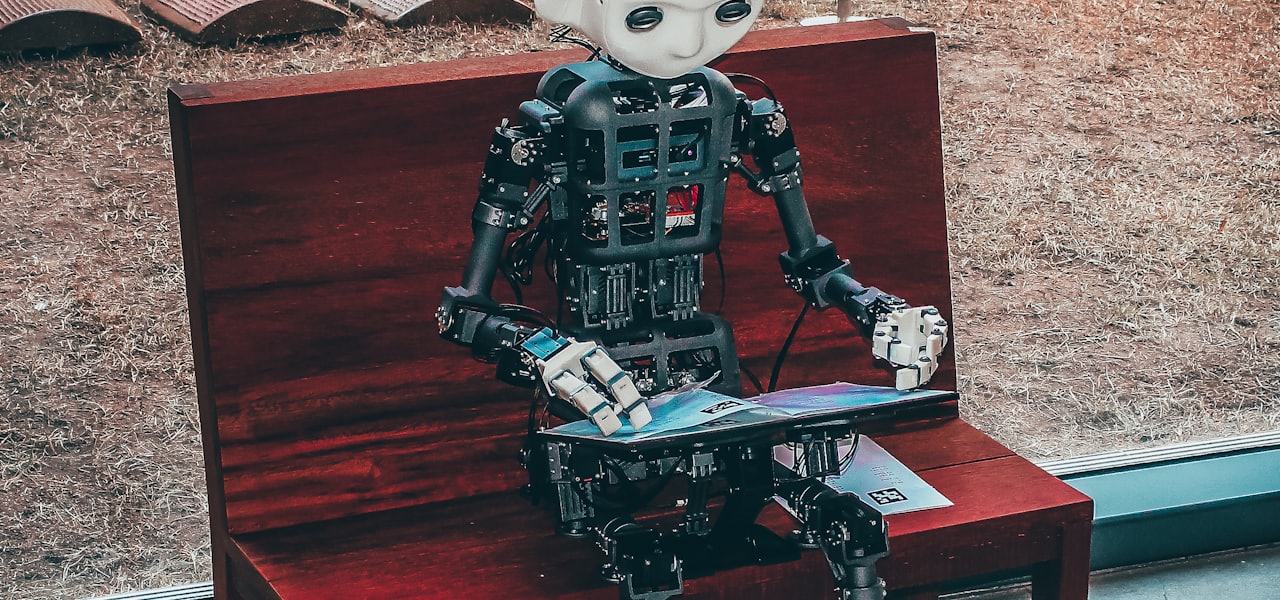
Computational semantics is a subfield of computational linguistics. Its goal is to elucidate the cognitive mechanisms supporting the generation and interpretation of meaning in humans. It usually involves the creation of computational models that simulate particular semantic phenomena, and the evaluation of those models against data from human participants. While computational semantics is a scientific field, it has many applications in real-world settings and substantially overlaps with Artificial Intelligence. Broadly speaking, the discipline can be subdivided into areas that mirror the internal organization of linguistics. For example, lexical semantics and frame semantics have active research communities within computational linguistics. Some popular methodologies are also strongly inspired by traditional linguistics. Most prominently, the area of distributional semantics, which underpins investigations into embeddings and the internals of Large Language Models, has roots in the work of Zellig Harris. Some traditional topics of interest in computational semantics are: construction of meaning representations, semantic underspecification, anaphora resolution, presupposition projection, and quantifier scope resolution. Methods employed usually draw from formal semantics or statistical semantics. Computational semantics has points of contact with the areas of lexical semantics (word-sense disambiguation and semantic role labeling), discourse semantics, knowledge representation and automated reasoning (in particular, automated theorem proving). Since 1999 there has been an ACL special interest group on computational semantics, SIGSEM.
LumenVox
LumenVox is a privately held speech recognition software company based in San Diego, California. LumenVox has been described as one of the market leaders in the speech recognition software industry. == History == LumenVox was founded in 2001 as subsidiary of Progressive Computing. According to LumenVox CEO Edward Miller, when Progressive had initially looked to add speech recognition to its own phone system, it found the existing offerings too expensive and recognized a niche in the market for a more affordable speech recognition product. This led to the development of LumenVox with an aim to bring speech recognition to small-to-midsized businesses. LumenVox is one of the major providers of automatic speech recognition for telephone systems, and as of 2006, became the second largest provider of speech recognition software. == Products == The primary LumenVox product is the LumenVox Speech Engine. It is a speaker-independent automatic speech recognizer that uses the Speech Recognition Grammar Specification for building and defining grammars. It has been integrated with several of the major voice platforms, including Avaya Voice Portal/Interactive Response, Aculab, and BroadSoft's BroadWorks. The Speech Engine was originally derived from CMU Sphinx, but LumenVox has added considerable development effort to make it a commercial-ready product. LumenVox also offers a product called the Speech Tuner, which provides a graphical means of testing and troubleshooting speech recognition applications. == Open source support == LumenVox was recognized as one of the top VoIP companies in 2008 for its work in providing its offerings to the open source community, an effort by the company that began in 2006 when it partnered with Digium. At that time, Digium, maintainer of the open source Asterisk PBX, integrated the LumenVox Speech Engine into Asterisk. This made LumenVox the first commercially available speech recognition engine for Asterisk. As one of the earlier commercial software integrations with Asterisk, the LumenVox integration has been described as one of the applications that helped to mainstream Asterisk. In 2009, LumenVox also began offering access to the Speech Engine as a monthly subscription, bringing the cost of entry down even lower for open source users. LumenVox is also integrated with the open source UniMRCP project, which provides open source client and server libraries for the Media Resource Control Protocol.
Kialo
Kialo is an online structured debate platform with argument maps in the form of debate trees. It is a collaborative reasoning tool for thoughtful discussion, understanding different points of view, and collaborative decision-making, showing arguments for and against claims underneath user-submitted theses or questions. The deliberative discourse platform is designed to present hundreds of supporting or opposing arguments in a dynamic argument tree and is streamlined for rational civil debate on topics such as philosophical questions, policy deliberations, entertainment, ethics, science questions, and unsolved problems or subjects of disagreement in general. Argument-boxes are structured into hierarchical branches where the root is the main thesis (or theses) of the debate, enabling deliberation and navigable debates between opposing perspectives. A debate is divided into Pro (supporting) and Con (refuting or devaluing) columns where registered users can add arguments and rate the impact on the weight or validity of the parent claim. The arguments are sorted according to the rating average. Its argument tree structure enables detailed scrutiny of claims at all levels of the tree and allows users to for example quickly understand why a decision was made or which of the aggregated arguments swayed it this way. Newcomers can join a debate at any time and look back at the structured discussion history, and then weigh in at the right place with their new argument or their comment on a specific argument. The design presets a structure on debates "that allows participants to easily see, process, and ultimately assess the many facets of competing claims". The word Kialo is Esperanto for "reason". The platform is the world's largest argument mapping and structured debate site. == Overview == Users can comment on every Pro or Con, for example for requesting sources or expansions. Recent activities of a debate are shown in a panel on the right side of the respective debate. Debates can be found through the search or on the Explore page through their descriptions and topic-tags. Mere comments that do not make a constructive point (a self-contained argument backed by reasoning) are not allowed and are picked up by other users and moderators. "Civil language and sensible observations from opposing perspectives" can be seen also in debates about controversial topics. The site by-design incentivizes fair, rigorous, open-minded dialogue. Contributors making claims often also write counterpoints to their own contribution. Claims need to be shorter than 500 characters and can link to external sources. Debate trees can also start off with multiple theses – such as different policy options or hypotheses. Claims can link to related debates or include segments of them. In the discussion tab of each claim, users can make edit proposals (e.g. for accuracy, improving sources, or changing scope), decide if the argument should be moved or copied to another branch, call for archiving a claim, and ask for extra evidence or clarification. Debates can grow large and complex for which a sunburst diagram visualization of the topology of the debate and the search functionality can be useful. Each debate also has a chat-box. In cases where e.g. a "Con" is a point against multiple in the "Pros", users – through moderators – can link these arguments at the respective places to avoid duplication of content and allowing a clean chain for people to understand which points are arguments against each other. Contributions of users are tracked, enabling a board of thought-leaders for every debate. Other gamification elements include a feature to thank users for their contributions. The "Perspectives" feature allows users to see 'Impact' ratings of supporters and opposers of a thesis as well as of the debate's moderators and individual contributors. It thereby enables participants to see a debate from other participants' perspectives and to sort by them. In Kialo Edu, this feature lets teachers view votes for a whole class, individuals, or supporters/opponents of a specific thesis. Users in both versions of Kialo can vote on the overall debate topic as well as on individual claims to express their perspectives or conclusions, with the rationale (i.e. the main causal arguments) why they voted on the veracity of the thesis as they did not being captured. Voting can be done by any registered user while navigating through any debate that has voting enabled or via using the Guided Voting wizard user interface that automatically walks through branches. As of 2021, Kialo doesn't have a mobile app. == Contents == A 2018 report stated the collaborative argument platform hosts more than 10,000 debates in various languages. It also hosts private debates. The website claims that it has over 18,000 public debates as of July 2023, as well as over 1 million votes and over 720,000 claims. Debates can be found via the site's internal search and up to six tags per debate. Preprint studies have scraped public debates on over 1.4K issues with over 130K statements as of October 2019 and 1628 debates, related to over 1120 categories, with 124,312 unique claims as of June 26, 2020. == Kialo Inc. == The site is run by Kialo Inc. It was founded by German-born entrepreneur and London School of Economics and Political Science graduate Errikos Pitsos in August 2017 and is based in Brooklyn and Berlin. According to a 2018 report, the site does not show advertisements and does not sell user's data. The for-profit company was founded in 2011, Pitsos began to develop the concept in 2012 and described various specifics of the system in 2014. In 2018, he stated that they intend to make money by selling the platform to companies as a deliberation and decision-making tool. The site is free to use for the public and in education. According to the site, as of 2023 Kialo.com is a non-revenue generating site with no ads and no reselling of user data. == Applications and adoption == === Adopted applications === Applications of its content or the platform in society include: Teachers and professors, especially in high schools – including the universities Harvard and Princeton, are using Kialo for class discussions and exercises in critical thinking and reasoning, as consolidating understanding of materials covered in recent classes, more useful and engaging learning experiences, for remote/e-learning, for clearing up misconceptions, teaching logical fallacies and rational argumentation, for academic dialogue, teaching media literacy, and for teaching to sufficiently reflect or research before posting online. Like for debaters of the main site, access for schools and universities is free. Kialo Edu is the custom version of Kialo specifically designed for classroom use where debates are private and locked to invited students. Kialo allows teachers to provide feedback to students on their ideas, argument structure, and research quality while it is left to other students to rate the impacts of their peers' arguments. Students can be allowed to contribute anonymously which may be useful for controversial issues as well as for safeguarding privacy in education. Students are or can be encouraged to back up their claims with evidence which can foster digital literacy and research skills. Students and teachers can use it to arrange their thoughts when structuring an essay or project. The site's name was decided on internally using the software. === Prototypical and theoretical applications === Potential, theoretical, prototypical or little-used applications include: Education Improving critical thinking skills of society at large as well as facilitating deep or efficient thinking and deepening research and debates where e.g. discussions are less shallow and the well-known or many arguments have already been made and in many cases aren't unreasonably over- or underrated. Pitsos claimed that "we're training students to be very good test-takers instead of critical thinkers", suggesting teaching people to think things through may be more important or neglected compared to essay writing skills. Many young people and adults are "submerged into a sea of dispersed information", "[b]rowsing and engaging in superficial thinking activities". Kialo could counteract this issue and help people develop good sane reasoning. Academia, R&D and policy Three scholars from three prestigious U.S. universities outlined possible benefits in this domain, including applications beyond higher education such as for academic communication. They suggest the debate platform could be used for structuring the communication of open peer-review by helping those giving feedback to "hone in on[sic] core arguments and pieces of evidence in an even more direct way" than annotated commenting. It could be used to evaluate extracted argument structures and sequences from raw texts, as in a Semantic Web for arguments. Such "argument mining", to which Kialo is the lar
The Murderbot Diaries
The Murderbot Diaries is a science fiction series by American author Martha Wells, published by Tor Books. The series is told from the perspective of the titular cyborg guard, a "SecUnit" owned by a futuristic megacorporation. SecUnits include "governor" modules that control and punish the constructs if they take any actions not approved by the company. The ironically self-named "Murderbot" hacked and disabled the module but pretends to be a normal SecUnit, staving off the boredom of security work by watching media. As it spends more time with a series of caring entities (both humans and artificial intelligences), it develops genuine friendships and emotional connections, which it finds inconvenient. The TV series Murderbot is based on the novels by Martha Wells. == Books == === Setting === In an advanced largely hyper-capitalist space-faring society, travel between star systems is routine due to now-stable wormhole technology. Initially, wormhole travel was unreliable, but has since improved to the point where "lost" colonies are being found. People reside on planets, some of which have been terraformed, or on space habitats which have full life support and artificial gravity. Most people who can afford it have technology that allows them to tap into ubiquitous data feeds supplying all kinds of information, including entertainment. This technology can be worn, or be implanted into the body. Sentient and semi-sentient artificial intelligences perform tasks such as operating starships, mining, controlling habitats, moving cargo, waging corporate warfare, providing physical pleasure and comfort, or security. Most of these purposes are fulfilled by "bots" of varying complexity and intelligence, but the last three are respectively performed by CombatUnits, ComfortUnits, and SecUnits. The characters and narrator of the book call these conscious entities "constructs", but they are functionally cyborgs (cybernetic organisms): part machine, part organic. A significant distinction, however, is that they are manufactured entities, not born and later modified. The Corporation Rim is a profit-oriented, cutthroat part of this society that indulges in espionage, assassination, indentured slavery, and ruthless exploitation of resources. One particular target of the corporations is illegal "alien remnant" exploitation. These remnants are often extremely dangerous to people and machines. The laws are enforced by other corporations. Outside the Corporation Rim are colonies, such as Preservation, that have established their right to exist under various laws that, at least for the time being, the corporations are unwilling to test. Wells noted in 2017 that All Systems Red, Artificial Condition, Rogue Protocol, and Exit Strategy "have an overarching story, with the fourth one bringing the arc to a conclusion". === Story chronology === "Compulsory" All Systems Red Artificial Condition Rogue Protocol Exit Strategy "Rapport" "Home" Fugitive Telemetry Network Effect System Collapse Platform Decay === All Systems Red (2017) === A scientific expedition on an alien planet goes awry when one of its members is attacked by a giant native creature. She is saved by the expedition's SecUnit (Security Unit), a security construct with a mixture of robot and human features. The SecUnit has secretly hacked the governor module allowing it to be controlled by humans and has named itself Murderbot, as it is heavily armed and designed for combat. However, it prefers to spend its time watching space operas and is uncomfortable interacting with humans. The SecUnit has a vested interest in keeping its human clients safe and alive, since it wants to avoid discovery of its autonomy and has an especially grisly expedition on its record. Murderbot soon discovers information regarding hazardous fauna has been deleted from their survey packet of the planet. Further investigation reveals some sections on their maps are missing as well. Meanwhile, the PreservationAux survey team, led by Dr. Mensah, navigate their mixed feelings about the part machine, part human nature of their SecUnit. As members of an egalitarian, independent planet outside of the Corporation Rim, the survey team struggles with the system of indentured servitude (and in many cases de facto slavery) the rim operates under. When they lose contact with the only other known expedition on the planet, the DeltFall Group, Mensah leads a team to the opposite side of the planet to investigate. At the DeltFall habitat, Murderbot discovers everyone there has been brutally murdered, and one of their three SecUnits has been destroyed. Murderbot disables the remaining two as they attack it but is surprised when two additional SecUnits appear. Murderbot destroys one, and Mensah takes the other. During these encounters, Murderbot is seriously injured. It also realizes one of the rogue SecUnits has installed a combat override module into its neck. The Preservation scientists are able to remove it before it completes the data upload which would put Murderbot under the control of whoever has command over the other SecUnits. The team discovers Murderbot is autonomous, and had once malfunctioned and murdered 57 people. The Preservation scientists mostly agree, based on its protective behavior thus far, the SecUnit can be trusted. Remembering small incidents which appear to be attempted sabotage, Murderbot and the group determine there must be a third expedition on the planet, whose members are trying to eliminate DeltFall and Preservation for some reason. The Preservation scientists confirm their HubSystem has been hacked. They flee their habitat before the mystery expedition they have dubbed EvilSurvey comes to kill them. The EvilSurvey team—GrayCris—leaves a message in the Preservation habitat inviting its scientists to meet at a rendezvous point to negotiate terms for their survival. Murderbot knows GrayCris will never let them live, so the SecUnit formulates a plan. It makes an overture to GrayCris to negotiate for its own freedom, but this is a distraction while the Preservation scientists access the GrayCris HubSystem to activate their emergency beacon. The plan works, but Murderbot is injured protecting Mensah from the explosion of the launch. Later, the SecUnit finds itself repaired retaining its memories and disabled governor module. Mensah has bought its contract, and she plans to bring it back to Preservation's home base where it can legally live autonomously. Though grateful, Murderbot is reluctant to have its decisions made for it, and it slips away on a cargo ship. === Artificial Condition (2018) === Murderbot makes deals with bots piloting unmanned cargo ships to travel toward the mining facility where it once malfunctioned—resulting in the death of 57 people. It hopes to learn more about the initial incident in which it went rogue, of which it has little memory. Murderbot boards the final ship and discovers the bot pilot is an unexpectedly powerful, intrusive artificial intelligence. They come to a tentative truce and watch media together during the final leg of the journey to RaviHyral, the station where the incident occurred. Murderbot learns the ship is a deep-space research vessel assigned to cargo runs during downtime, which explains why the bot pilot is so sophisticated. Murderbot reluctantly allows this artificial intelligence—which it has dubbed ART (Asshole Research Transport) due to its sarcastic personality—to make physical modifications to the SecUnit's body to allow it to pass for an augmented human, and to disconnect the data port at the back of its neck which had been used to insert a combat override module in the previous book. To gain access to the RaviHyral facility, Murderbot takes a contract as a security consultant for three scientists who are meeting with their former employer, the head and namesake of Tlacey Excavations, to negotiate the return of their research, which they believe was illegally seized by the company. Their transport craft is sabotaged, but with ART's help, Murderbot is able to land it safely. Now aware Tlacey is actively trying to kill the scientists rather than comply with their demands, Murderbot guides them through their meeting with Tlacey and thwarts another assassination attempt. Murderbot returns to the site of the massacre and learns it was the result of another mining operation's sabotage attempt using malware, which made all of the facility's SecUnits go berserk. The facility's ComfortUnits—weaponless, anatomically correct constructs sometimes disparagingly called "sexbots"—died attempting to stop the massacre. Tlacey's ComfortUnit voices its desire for freedom and willingness to help Murderbot thwart Tlacey. While the SecUnit meets with a Tlacey employee to secretly retrieve a copy of the research, Tlacey abducts one of the scientists, Tapan. Murderbot goes after her, accepting a combat override module intended to control the SecUnit but actually has no effect, due
Argument mining
Argument mining, or argumentation mining, is a research area within the natural language processing field. The goal of argument mining is the automatic extraction and identification of argumentative structures from natural language text with the aid of computer programs. Such argumentative structures include the premise, conclusions, the argument scheme and the relationship between the main and subsidiary argument, or the main and counter-argument within discourse. The Argument Mining workshop series is the main research forum for argument mining related research. == Applications == Argument mining has been applied in many different genres including the qualitative assessment of social media content (e.g. Twitter, Facebook), where it provides a powerful tool for policy-makers and researchers in social and political sciences. Other domains include legal documents, product reviews, scientific articles, online debates, newspaper articles and dialogical domains. Transfer learning approaches have been successfully used to combine the different domains into a domain agnostic argumentation model. Argument mining has been used to provide students individual writing support by accessing and visualizing the argumentation discourse in their texts. The application of argument mining in a user-centered learning tool helped students to improve their argumentation skills significantly compared to traditional argumentation learning applications. == Challenges == Given the wide variety of text genres and the different research perspectives and approaches, it has been difficult to reach a common and objective evaluation scheme. Many annotated data sets have been proposed, with some gaining popularity, but a consensual data set is yet to be found. Annotating argumentative structures is a highly demanding task. There have been successful attempts to delegate such annotation tasks to the crowd but the process still requires a lot of effort and carries significant cost. Initial attempts to bypass this hurdle were made using the weak supervision approach.
Inception (deep learning architecture)
Inception is a family of convolutional neural network (CNN) for computer vision, introduced by researchers at Google in 2014 as GoogLeNet (later renamed Inception v1). The series was historically important as an early CNN that separates the stem (data ingest), body (data processing), and head (prediction), an architectural design that persists in all modern CNN. == Version history == === Inception v1 === In 2014, a team at Google developed the GoogLeNet architecture, an instance of which won the ImageNet Large-Scale Visual Recognition Challenge 2014 (ILSVRC14). The name came from the LeNet of 1998, since both LeNet and GoogLeNet are CNNs. They also called it "Inception" after a "we need to go deeper" internet meme, a phrase from Inception (2010) the film. Because later, more versions were released, the original Inception architecture was renamed again as "Inception v1". The models and the code were released under Apache 2.0 license on GitHub. The Inception v1 architecture is a deep CNN composed of 22 layers. Most of these layers were "Inception modules". The original paper stated that Inception modules are a "logical culmination" of Network in Network and (Arora et al, 2014). Since Inception v1 is deep, it suffered from the vanishing gradient problem. The team solved it by using two "auxiliary classifiers", which are linear-softmax classifiers inserted at 1/3-deep and 2/3-deep within the network, and the loss function is a weighted sum of all three: L = 0.3 L a u x , 1 + 0.3 L a u x , 2 + L r e a l {\displaystyle L=0.3L_{aux,1}+0.3L_{aux,2}+L_{real}} These were removed after training was complete. This was later solved by the ResNet architecture. The architecture consists of three parts stacked on top of one another: The stem (data ingestion): The first few convolutional layers perform data preprocessing to downscale images to a smaller size. The body (data processing): The next many Inception modules perform the bulk of data processing. The head (prediction): The final fully-connected layer and softmax produces a probability distribution for image classification. This structure is used in most modern CNN architectures. === Inception v2 === Inception v2 was released in 2015, in a paper that is more famous for proposing batch normalization. It had 13.6 million parameters. It improves on Inception v1 by adding batch normalization, and removing dropout and local response normalization which they found became unnecessary when batch normalization is used. === Inception v3 === Inception v3 was released in 2016. It improves on Inception v2 by using factorized convolutions. As an example, a single 5×5 convolution can be factored into 3×3 stacked on top of another 3×3. Both has a receptive field of size 5×5. The 5×5 convolution kernel has 25 parameters, compared to just 18 in the factorized version. Thus, the 5×5 convolution is strictly more powerful than the factorized version. However, this power is not necessarily needed. Empirically, the research team found that factorized convolutions help. It also uses a form of dimension-reduction by concatenating the output from a convolutional layer and a pooling layer. As an example, a tensor of size 35 × 35 × 320 {\displaystyle 35\times 35\times 320} can be downscaled by a convolution with stride 2 to 17 × 17 × 320 {\displaystyle 17\times 17\times 320} , and by maxpooling with pool size 2 × 2 {\displaystyle 2\times 2} to 17 × 17 × 320 {\displaystyle 17\times 17\times 320} . These are then concatenated to 17 × 17 × 640 {\displaystyle 17\times 17\times 640} . Other than this, it also removed the lowest auxiliary classifier during training. They found that the auxiliary head worked as a form of regularization. They also proposed label-smoothing regularization in classification. For an image with label c {\displaystyle c} , instead of making the model to predict the probability distribution δ c = ( 0 , 0 , … , 0 , 1 ⏟ c -th entry , 0 , … , 0 ) {\displaystyle \delta _{c}=(0,0,\dots ,0,\underbrace {1} _{c{\text{-th entry}}},0,\dots ,0)} , they made the model predict the smoothed distribution ( 1 − ϵ ) δ c + ϵ / K {\displaystyle (1-\epsilon )\delta _{c}+\epsilon /K} where K {\displaystyle K} is the total number of classes. === Inception v4 === In 2017, the team released Inception v4, Inception ResNet v1, and Inception ResNet v2. Inception v4 is an incremental update with even more factorized convolutions, and other complications that were empirically found to improve benchmarks. Inception ResNet v1 and v2 are both modifications of Inception v4, where residual connections are added to each Inception module, inspired by the ResNet architecture. === Xception === Xception ("Extreme Inception") was published in 2017. It is a linear stack of depthwise separable convolution layers with residual connections. The design was proposed on the hypothesis that in a CNN, the cross-channels correlations and spatial correlations in the feature maps can be entirely decoupled. Training each network took 3 days on 60 K80 GPUs, or approximately 0.5 petaFLOP-days.
Abu Dhabi Autonomous Racing League
The Abu Dhabi Autonomous Racing League (A2RL) is an autonomous racing league based in Abu Dhabi and organized by ASPIRE, part of the UAE government's Advanced Technology Research Council. It has three distinct categories: the "car race", the drone race, and the buggy race. The first car race was held on 27 April 2024 at the Yas Marina Circuit, marking the first major autonomous formula race outside the US since the now-folded Roborace championship. The first drone race was held on 11 and 12 April 2025. == Formats == A2RL has three distinct formats, the formula racing format (dubbed the Car Race), the quadcopter drone racing format (dubbed the Drone Race), and the off-road dune buggy racing format (dubbed the Buggy Race). === Car Race === A2RL's main event, the car race is a standard formula racing format with self-driving formula cars. The cars are made by Dallara and are modified versions of Super Formula cars with Yokohama tires. These cars had the CPUs of their AIs mounted where the driver's seat is on a non-modified chassis, as well as hydraulic actuators for AI control of the vehicle, multiple sensor systems including LIDAR and GPS, and a large LED indicator showing the status of the AI. The first car race was held on 27 April 2024. This race was marked by the cars' subpar performance: Out of four cars that qualified, only two finished the race - the other two did not. The next race was held on 15 November 2025, with 11 teams. ==== Technical specifications ==== The full list of technical specifications are as follows: Chassis: Dallara EAV24 (modified Dallara SF23) Forward suspension: Pushrod type, torsion bar spring, adjustable dampers, third element Rear suspension: Pushrod type, torsion bar, coil springs, adjustable dampers, third element Tires: Yokohama Advan Drive-by-wire system: Provided by Meccanica 42, the DBW system consists of steering and brake actuators, with a central ECU that coordinates the driving actions and reacts to any critical situation in real-time. Brakes: Brembo calipers, Brembo carbon discs, electro-hydraulically activated Engine: 4 Piston Racing K20C1 (based on Honda 2.0l; turbocharged 4-cylinder engine) Gearbox: 3MO 6-speed gearbox Sensor suite: 7x Sony IMX728 cameras, 4x ZF ProWave radar units, 3x Seyond Falcon Kinetic lidar units Main computer: Neousys RGS-8805GC ==== Races held ==== === Drone Race === Created in partnership with the Drone Champions' League, the drone race is the quadcopter drone racing aerial format of the A2RL. The first race was held on 11/12 April 2025 at the ADNEC Marina Hall. 10 teams are scheduled to take part. === Buggy Race === The buggy race will be the off-road format of the A2RL using self-driving dune buggies. No date or number of teams has been announced for the first race. === Other events === A2RL is known to host AI vs AI and Human vs AI events, in Abu Dhabi and abroad. One such event took place at the Suzuka Circuit in Japan. The Human vs AI race was precluded due to AI car "Yalla" crashing into the wall during the formation lap. == Team lists ==